07. Data Flow Diagram (DFD)
Level 0 DFD: Illustrates how the Participant data flows from the UI through the Spring Gateway to the Media Engine.
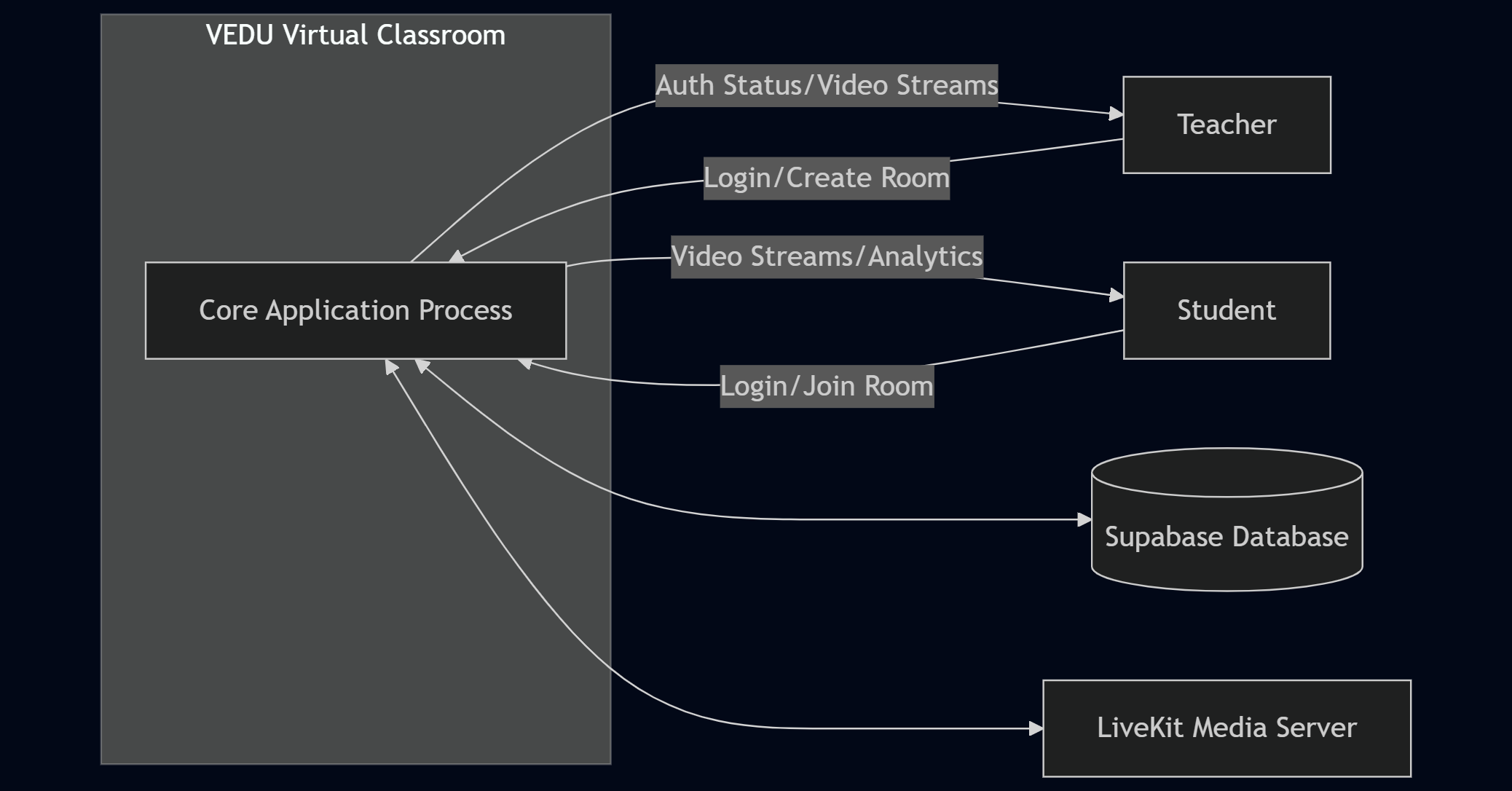
Flow: User -> Login API -> Room Token API -> Media Stream Engine
A Liquid-UI Based Real-Time Collaborative Virtual Classroom Platform for 2026 Pedagogy.
Vedu solves the "Zoom Fatigue" problem of limited time meet and specialized classroom management. It bridges the gap between static LMS and chaotic video calls.
Backend: Java 17, Spring Boot 3.2.x
Database: PostgreSQL via Supabase
Media Server: LiveKit / OpenVidu v3
Frontend: JavaScript (ES6), HTML5/CSS3
Min Server: 4GB RAM, 2vCPU (For signaling)
Client Bandwidth: 2.5 Mbps (720p Video)
SSL: Required for WebRTC WSS
The system utilizes a Service-Oriented Architecture (SOA).
1. Client signs in via Supabase Auth.
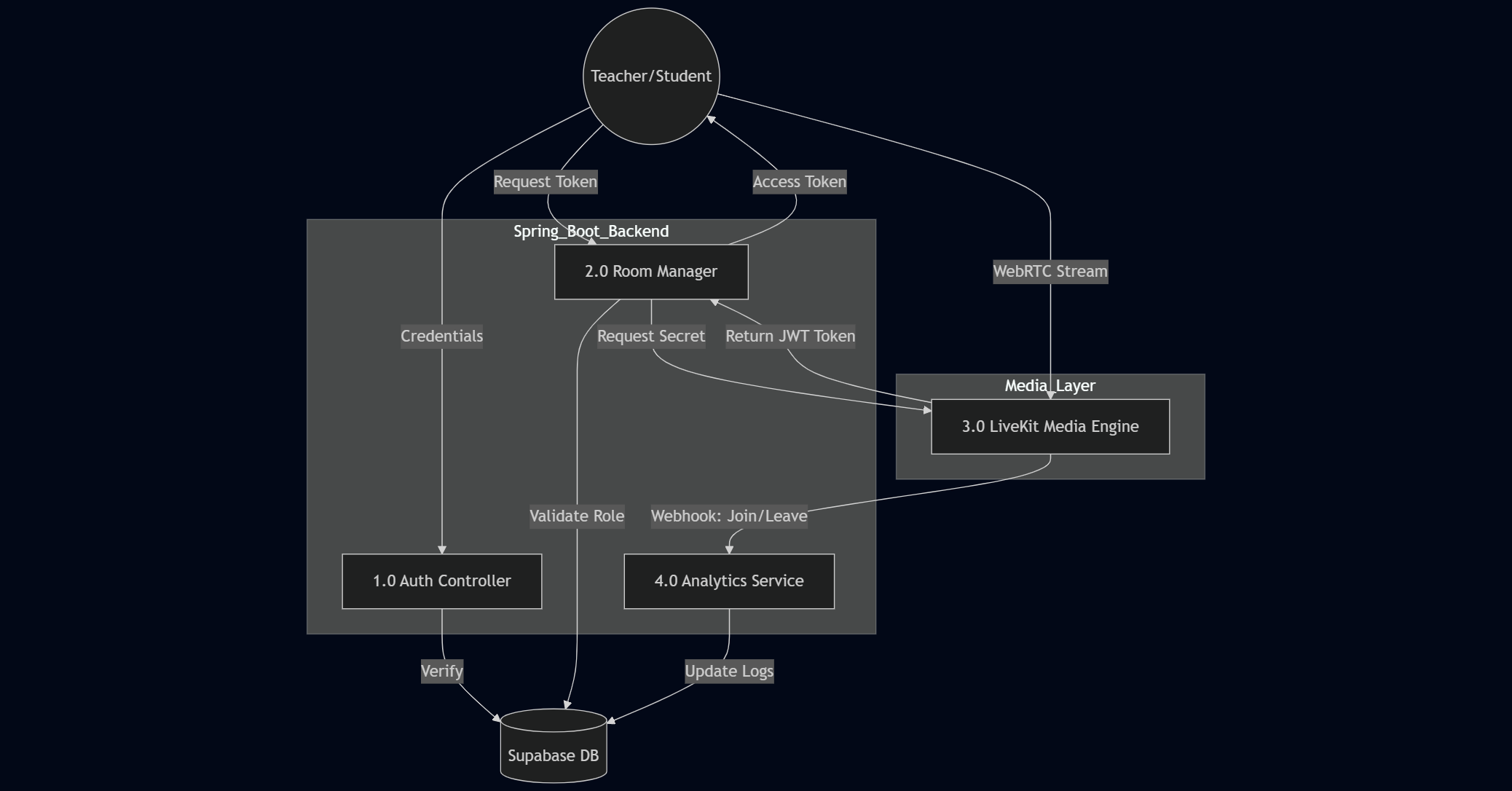
2. Client hits Spring Boot `/api/meetings/token` with Room Name.
3. Spring Boot verifies roles and requests Token from LiveKit.
4. Client uses JWT to open a WebSocket (WSS) to the Media Server.
A 12-week iterative development cycle (SDLC - Agile).
| Phase | Weeks | Deliverable |
|---|---|---|
| Requirement Analysis | 1-2 | SRS Document |
| Backend Dev (Spring/Auth) | 3-5 | REST APIs & Supabase Integration |
| RTC Integration (LiveKit) | 6-8 | Signaling & Media Streams |
| Liquid UI Deployment | 9-10 | Responsive Dashboards |
| Testing & Optimization | 11-12 | Final Deployment & Manuals |
| Attribute | Data Type | Description |
|---|---|---|
| user_id | UUID | Primary Key from Auth.users |
| user_type | TEXT | Used for Storing Usertype |
| full_name | VARCHAR(100) | Displayed on Video Label |
| room_token | TEXT | Temporary LiveKit Session Token |
| access_token | TEXT | Temporary user Session Token |
| is_teacher | BOOLEAN | Role check for classroom controls |
Level 0 DFD: Illustrates how the Participant data flows from the UI through the Spring Gateway to the Media Engine.
Level 1 DFD: Illustrates how the Participant data flows from the UI through the Spring Gateway to the Media Engine.
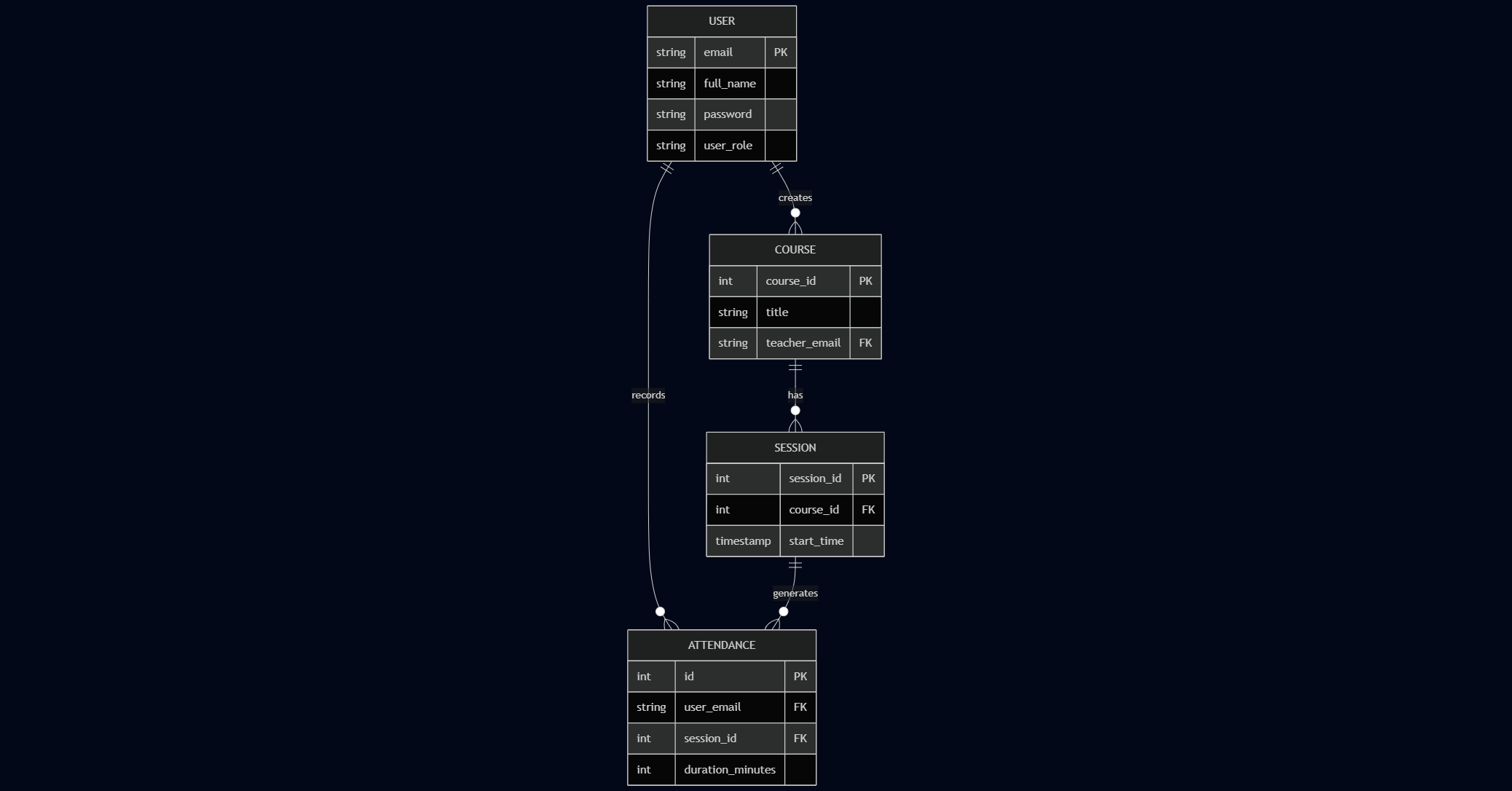
Schema Logic: One Teacher manages many Courses. One Course has many Sessions. Sessions generate multiple Attendance records.
The system provides automated reporting for educational auditing:
1. AI Summaries: Integration of Gemini API to summarize lecture transcripts.
2. Mobile App: Native iOS/Android apps using LiveKit Mobile SDK.
3. Whiteboard: Real-time SVG canvas for collaborative math work.
• LiveKit.io Documentation (2025/26)
• Spring Boot 3.2 Framework Guides
• Supabase Realtime & Auth Documentation